
LATEST NEWS
political battles threatening Mt Kenya unity ahead of 2027
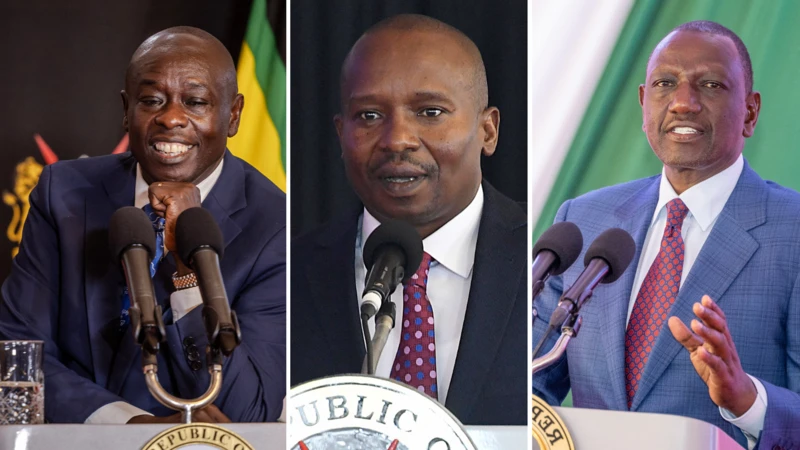
As Kenya approaches the 2027 General Election, the Mt Kenya region—one of the country’s most influential voting blocs—is facing serious internal political divisions. Traditionally, the region has voted as a unified bloc, giving it strong bargaining power in national politics. However, emerging rivalries among key leaders now threaten that unity.
At the center of these tensions is a growing power struggle involving President William Ruto, Deputy President Kithure Kindiki, and former Deputy President Rigathi Gachagua. These leaders are competing directly or indirectly for control and influence over the Mt Kenya vote, which is estimated to consist of millions of voters and has historically played a decisive role in determining Kenya’s presidency.
Rigathi Gachagua, who was impeached in 2024 and later replaced by Kithure Kindiki as Deputy President, has since repositioned himself politically and even declared interest in running for the presidency in 2027. His political activities and grassroots mobilization efforts are seen as an attempt to reclaim dominance in the region.
On the other hand, Kithure Kindiki, now serving as Deputy President under President William Ruto, represents the government’s influence in the Mt Kenya region. His leadership is viewed as part of a broader strategy by Ruto’s administration to maintain control and support within this crucial voting bloc.
President William Ruto himself plays a central role in these dynamics, as his political future in 2027 heavily depends on retaining support from Mt Kenya. Analysts suggest that divisions within the region could either weaken or strengthen his chances depending on how the alliances shift over time.
The rivalry between Gachagua and Kindiki has intensified into what many describe as a battle for the “kingpin” position in Mt Kenya. This competition has already created visible divisions, with different parts of the region and political leaders aligning themselves with different camps.
Beyond individual rivalries, several broader political battles are contributing to the fragmentation of the region. These include competition between political parties, disagreements over development priorities, struggles for national leadership positions such as the Deputy President role, and emerging regional divisions within Mt Kenya itself.
If these conflicts continue, Mt Kenya risks losing its long-standing unity and, with it, its political influence at the national level. A divided region may no longer act as a kingmaker in elections, reducing its ability to negotiate power and resources.
In conclusion, the political battles involving William Ruto, Rigathi Gachagua, and Kithure Kindiki are not just personal rivalries but represent a larger struggle for control of Mt Kenya’s political direction. The outcome of these battles will significantly shape the region’s role and influence in the 2027 General Election.